
US

Columbus Woman Threatened by Apparent ICE Agents for Following Their Vehicles
A 20-year-old Columbus woman, Jessica Lucia Villa, and her 18-year-old sister, Alexa Lucia Villa, were pulled over and threatened by individuals they believed to be ICE agents. The sisters had been following the suspicious vehicles to warn family and neighbors of a potential ICE presence in their area. The encounter, which was captured on a TikTok video, occurred on December 20 after the sisters spotted a white car and a grey SUV near a plaza on Karl Road. The agents, who were masked, approached the sisters' car and warned them to stop following them, threatening to break their window and arrest them if they continued. Villa said she had researched the legality of following law enforcement vehicles before doing so and did not believe she was doing anything wrong. The incident has sparked concern in the community, with many sharing videos of ICE arrests on social media. ICE has increased its visibility in Columbus and surrounding areas as part of "Operation Buckeye." Villa said she does not regret her actions, feeling a responsibility to protect those in her community who cannot safely leave their homes due to fear of being accosted by federal agents. Villa's decision to follow the agents was motivated by a desire to warn her family and neighbors, particularly those who are undocumented or have loved ones who are. She expressed concern for the well-being of families who are being "ripped apart" by ICE actions. The Columbus Dispatch reached out to ICE for comment on the incident, but the agency has not yet responded. Ohio law states that a person commits an offense only if they "hamper or impede a public official in the performance of the public official's lawful duties" through an affirmative act. Villa's actions have sparked a wider conversation about the presence of ICE in Columbus and the impact it has on the community. She said she would rather something happen to her than to someone who cannot defend themselves, highlighting the fear and uncertainty that many are feeling. The incident has been widely shared on social media, with many expressing outrage and concern over the actions of the apparent ICE agents. Villa's bravery in standing up for her community has been praised by many, with some calling her a hero for her actions.

US Denies Visas to UK Campaigners and European Officials Over Free Speech Concerns
The US State Department has denied visas to five individuals, including two British campaigners, accusing them of seeking to "coerce" American tech platforms into suppressing free speech. Imran Ahmed, head of the Centre for Countering Digital Hate (CCDH), and Clare Melford, CEO of the Global Disinformation Index (GDI), were labelled "radical activists" by the Trump administration. A French ex-EU commissioner, Thierry Breton, and two senior figures at a Germany-based anti-online hate group, Anna-Lena von Hodenberg and Josephine Ballon, were also denied visas. The move has been met with criticism from European leaders, with French President Emmanuel Macron calling it "intimidation" and the EU "strongly condemning" the visa ban. The UK government stated it is "fully committed" to upholding free speech, while also supporting laws and institutions that work to keep the internet free from harmful content. The US government billed the measures as a response to individuals and organizations that have campaigned for restrictions on American tech firms. Secretary of State Marco Rubio stated that the individuals belonged to a "global censorship-industrial complex" and that the US would not tolerate "extraterritorial overreach" by foreign censors targeting American speech. The affected individuals and organizations have denied the allegations, with the GDI calling the visa sanctions an "authoritarian attack on free speech" and the CCDH yet to comment. The move has sparked a diplomatic row between the US and European countries, with the EU seeking clarification on the visa ban.
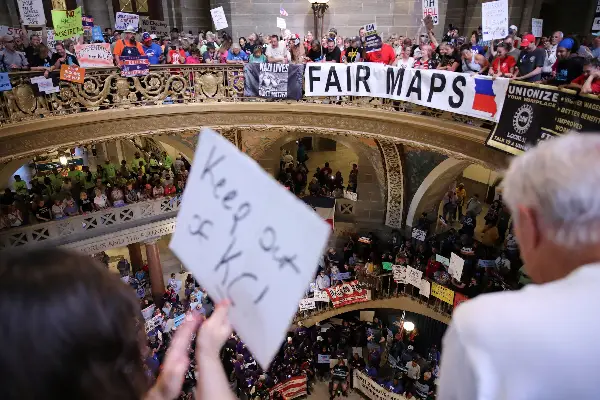
Redistricting Battles Intensify Ahead of 2026 Midterms
The race to redistrict is escalating, with five states adopting new congressional maps since September and many lawsuits moving through courts. The effects on the midterms are increasingly unpredictable, with the Supreme Court set to rule on a major case that may gut the Voting Rights Act. Readers' questions about the landscape have been answered, including how mid-decade redistricting is constitutional, the potential gains for each party, and the role of courts in addressing complaints. The Supreme Court has ruled that neither the federal constitution nor federal law bans mid-decade redistricting, and Congress has the authority to create a prohibition. Several bills have been filed to ban states from redrawing maps mid-decade unless ordered to by a court. The current count of seats that have become more red or blue due to redistricting shows a slight overall advantage for the GOP, with one to two seats gained across six states. However, the outcome is uncertain, with two more states set to redraw their maps and the possibility of the Supreme Court gutting the Voting Rights Act. State Democrats who have control are not redistricting in some cases due to legal barriers, while in others, they are choosing not to. Some states have constitutional rules against gerrymandering, which can affect the electoral map. Utah's courts invoked such rules to strike down a GOP-drawn map, but the effectiveness of these rules depends on judges applying them. Nationwide reforms, such as independent commissions or proportional representation, could address the issue of uncompetitive districts. Proportional representation, in particular, may help third parties grow and diminish the importance of redistricting. The Supreme Court's inconsistent application of the Purcell principle has been criticized, with concerns that it may be used to game federal law. The principle, which prohibits courts from intervening in election-related cases close to an election, has been applied unevenly, leaving voters and politicians frustrated. As the redistricting landscape continues to evolve, the impact on the 2026 midterms remains uncertain, with many factors at play.

Venezuela Accuses US of Extortion Over Seizure of Oil Tankers
Venezuela has accused the United States of "the greatest extortion" at an emergency session of the UN Security Council in New York. The accusation comes after the US seized two Venezuelan oil tankers off the coast of Venezuela earlier this month. The Venezuelan ambassador to the UN, Samuel Moncada, described the seizure as "worse than piracy" and said it was an example of the US acting outside of international law. The US has also announced that it is pursuing a third Venezuelan oil tanker and has said it will keep or sell the crude oil it has taken, as well as the vessels themselves. The US has been building up its military presence in the Pacific and Caribbean Seas in recent months, with the stated aim of stopping the flow of fentanyl and cocaine to the US. The US Ambassador to the UN, Michael Waltz, responded by saying that the US does not recognize President Nicolas Maduro as the legitimate leader of Venezuela and that his ability to sell Venezuela's oil enables his "fraudulent claims to power and his narco-terrorist activities." Russia and China have accused the US of bullying and aggression, with the Russian ambassador warning that other countries could be next. The seizure of the oil tankers is part of a larger escalation of tensions between the US and Venezuela, with President Trump having ordered a naval blockade of all sanctioned oil tankers entering and leaving Venezuela on December 16. The situation has sparked concerns about the potential for further conflict in the region.
Federal Judge Upholds New York's Green Light Law, Allowing Driver's Licenses for Undocumented Immigrants
A federal judge has ruled in favor of New York's Green Light Law, which allows undocumented immigrants to obtain driver's licenses without proving their legal status. U.S. District Judge Anne M. Nardacci rejected the Trump administration's challenge to the law, stating that the administration failed to support its claims that the law usurps federal law or discriminates against the federal government. The law, enacted to improve public safety on the roads, allows individuals without a valid Social Security number to submit alternative forms of ID, such as valid passports or driver's licenses issued in other countries. Applicants must still pass a road test to qualify for a standard driver's license. The Justice Department had argued that the law was a "frontal assault" on federal immigration laws and sought to strike it down. However, Judge Nardacci found that the administration's arguments did not establish a violation of the U.S. Constitution's Supremacy Clause. The ruling allows New York to continue issuing driver's licenses to undocumented immigrants, making it easier for them to obtain auto insurance and reducing the number of uninsured drivers on the road. The decision is a significant victory for the state and immigrant advocacy groups, who have argued that the law is essential for public safety and the well-being of immigrant communities. The Green Light Law has been the subject of controversy since its enactment, with the Trump administration attempting to pressure New York into changing the law by restricting access to trusted traveler programs. However, the state has maintained that the law is essential for improving public safety and promoting the integration of immigrant communities. With Judge Nardacci's ruling, the law will remain in effect, allowing thousands of undocumented immigrants to obtain driver's licenses and access other essential services.
NORAD Celebrates 70 Years of Tracking Santa's Sleigh
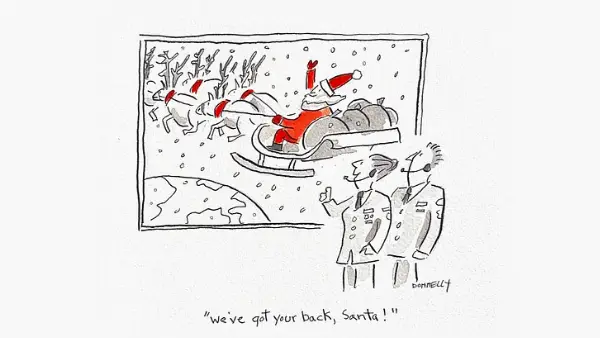
The North American Aerospace Defense Command (NORAD) is celebrating 70 years of tracking Santa's sleigh. The tradition began in 1955 when a child accidentally called Colonel Harry Shoup of Continental Air Defense Command (CONAD) instead of Santa Claus. Shoup recognized the opportunity to use the interest in Santa to call attention to the air defense system. A few weeks after the call, Shoup informed the news wire services that CONAD was tracking Santa's sleigh, and the story was well-received by reporters. In 1957, Canada and the U.S. formed the North American Air Defense Command, which later became NORAD. By Christmas Eve 1960, NORAD was posting updates on Santa's flight, including a reported emergency landing on the ice of Hudson Bay. Since then, NORAD has continued to track Santa's sleigh, with fighter jets frequently intercepting the sleigh to salute Santa. The operation has grown to include over 1,000 Canadian and American military personnel, Defense Department civilian workers, and local participants who volunteer to answer over 100,000 phone calls from children around the world on Christmas Eve. The tradition has become a testament to the longstanding U.S.-Canadian friendship and a way for adults to create a magical world for children. For one night a year, the world of international alliances, intelligence, radar, satellites, and fighter jets turns into a night of magic and wonder. NORAD's mission has expanded over the years to include collecting information about the Earth's atmosphere, coastal waters, and intelligence, and it remains key to U.S. and Canadian defense. The tradition of tracking Santa's sleigh has become an integral part of NORAD's operations and a beloved holiday tradition for children around the world.
19 States and D.C. Sue HHS Over Effort to Ban Transgender Care for Minors
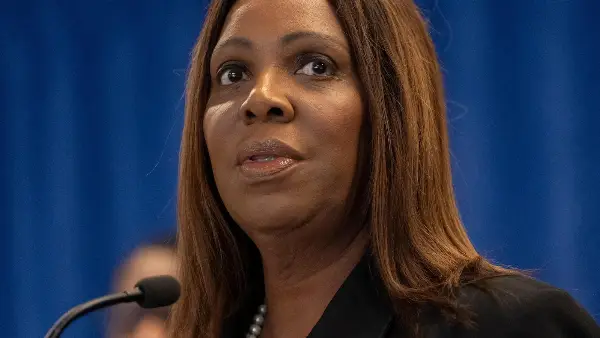
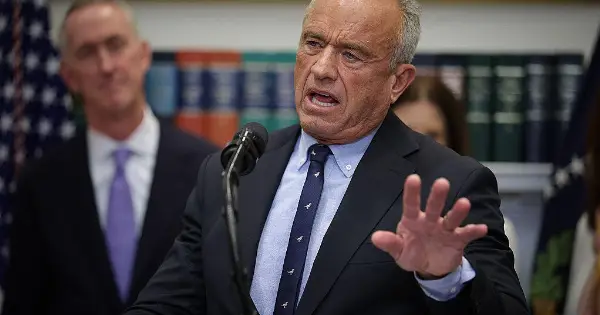
A coalition of 19 states and the District of Columbia has sued the U.S. Department of Health and Human Services (HHS) over a declaration that could limit access to gender-affirming care for young people. The declaration, issued last Thursday, deemed treatments like puberty blockers, hormone therapy, and surgeries unsafe and ineffective for children and adolescents experiencing gender dysphoria. It also warned doctors that they could be excluded from federal health programs if they provide such care. The lawsuit, filed in U.S. District Court in Eugene, Oregon, alleges that the declaration is inaccurate and unlawful. It claims that HHS's declaration seeks to coerce providers to stop providing gender-affirming care and circumvent legal requirements for policy changes. New York Attorney General Letitia James, who led the lawsuit, stated that Secretary Robert F. Kennedy Jr. cannot unilaterally change medical standards and that no one should lose access to medically necessary healthcare due to government interference. The declaration is part of a broader effort by the Trump administration to limit gender-affirming healthcare for children and teenagers. HHS has also proposed rules to cut off federal Medicaid and Medicare funding from hospitals that provide gender-affirming care to children. Major medical groups and organizations have criticized the report as inaccurate, and most major U.S. medical organizations continue to oppose restrictions on transgender care and services for young people. The lawsuit was joined by Democratic attorneys general from 18 states and the District of Columbia, as well as Pennsylvania's Democratic governor. The case marks the latest clash between the administration and advocates for transgender healthcare, with the administration arguing that such care can be harmful to children and advocates saying it is medically necessary and should not be inhibited.
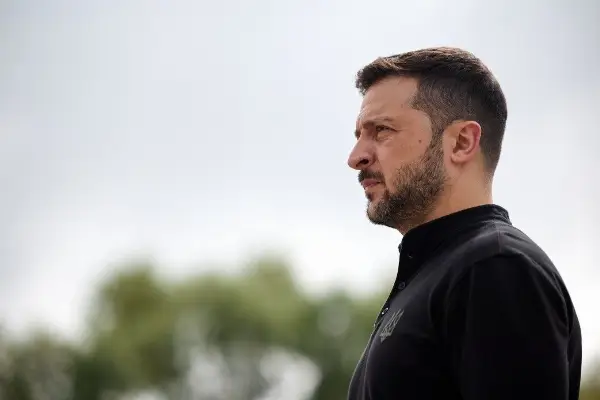
Ukraine and US Unveil Revised 20-Point Peace Plan to End Russia's War
Ukraine and the US have prepared a revised 20-point peace plan to end Russia's full-scale war. The plan, presented by President Volodymyr Zelensky, includes a non-aggression agreement between Russia and Ukraine, security guarantees for Ukraine, and a monitoring mechanism to oversee the conflict line. The US, NATO, and European signatory states will provide Ukraine with "Article 5–like" guarantees, which include a coordinated military response in case of a Russian invasion. Ukraine will also receive a global development package, including a development fund, joint investments in gas infrastructure, and rebuilding of war-torn areas. The plan also addresses the control of the Zaporizhzhia Nuclear Power Plant, with Ukraine proposing a joint venture between the US and Ukraine, while the US suggests a tripartite control with Russia. However, Ukraine opposes Russian control over the plant. The plan also includes provisions for the introduction of school courses promoting understanding and tolerance, and the recognition of the line of military positions as the de facto front line in certain regions. The US is expected to deliver the draft to Moscow, and if approved, the final document must be signed by the leaders of Ukraine, the US, Europe, and Russia. The ceasefire is expected to start as soon as the agreement is signed, and the agreement must be ratified by the Ukrainian parliament or supported by the people of Ukraine in a referendum within 60 days. However, two major issues remain unresolved, including control of the Zaporizhzhia Nuclear Power Plant and the Donbas region.
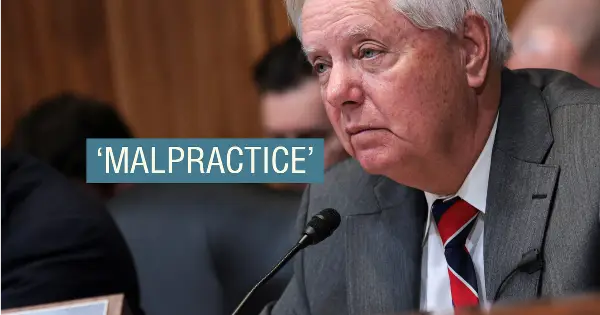
Senator Lindsey Graham Plans Next Republican Party-Line Bill
Senaate Budget Chairman Lindsey Graham is moving forward with plans for another Republican party-line reconciliation bill, despite uncertainty from other party leaders. Graham believes it would be "political malpractice" not to pursue another reconciliation bill and intends to start the process with a budget resolution early next year. The proposed legislation could include military funding, health care legislation, and a grant program for states that assist Immigration and Customs Enforcement (ICE) in immigration enforcement. President Donald Trump and some Republican leaders have not yet committed to supporting the bill, with Trump preferring the elimination of the legislative filibuster, which Republicans are unwilling to do. However, several Republicans, including Senate Majority Leader John Thune, consider another reconciliation bill a possible option if a bipartisan deal on health care cannot be reached. Graham's move suggests that Republicans may still attempt to pass significant legislation this Congress, even without bipartisan support. The decision to pursue another party-line bill comes as Republicans weigh their options for advancing their legislative agenda. With the filibuster intact, reconciliation bills offer one of the few avenues for passing major legislation without Democratic support. Graham's plan will likely face challenges and uncertainties, but it represents a key development in the ongoing efforts of Republicans to shape their legislative strategy.

US and Ukraine Reach Consensus on Key Issues to End War, But Sensitive Topics Remain Unresolved
The United States and Ukraine have reached a consensus on several critical issues aimed at bringing an end to the nearly four-year conflict. However, sensitive issues around territorial control in Ukraine's eastern industrial heartland and the management of the Zaporizhzhia nuclear power plant remain unresolved. Ukraine's President Volodymyr Zelenskyy spoke about the 20-point plan, which was hammered out after marathon talks in Florida, and will be presented to Russian negotiators. The plan intertwines political and commercial interests to safeguard security while boosting economic potential. The most difficult point of contention is the territorial dispute concerning the Donetsk and Luhansk regions, known as the Donbas. Russia has captured most of Luhansk and about 70% of Donetsk, and Ukraine has rejected Russia's demands to relinquish the remaining territory. The US has proposed transforming these areas into free economic zones, but Ukraine insists that any arrangement must be contingent upon a referendum. The management of the Zaporizhzhia nuclear power plant is another contentious issue. The US is proposing a consortium with Ukraine and Russia, but Ukraine has countered with a joint venture proposal between the US and Ukraine. Zelenskyy said that billions in investments are needed to make the plant run again, including restoring the adjacent dam. The draft proposal also includes security guarantees, a free trade agreement between Ukraine and the US, and funds for the reconstruction of territories destroyed in the war. Ukraine is asking that all prisoners since 2014 be released at once, and that civilian detainees, political prisoners, and children be returned to Ukraine. A response from Moscow is expected on Wednesday.

New Epstein Documents Released, SCOTUS Rules on National Guard in Chicago, and US GDP Growth Exceeds Expectations
The Justice Department has released approximately 30,000 pages of new documents related to convicted sex offender Jeffrey Epstein, including flight logs, memos, and letters. The files contain hundreds of references to President Trump, although Trump has not been accused of any wrongdoing. The documents highlight the relationship between Trump and Epstein, raising questions about how much Trump knew about Epstein's activities. The Supreme Court has ruled that National Guard troops must stay out of Chicago, with a 6-3 decision stating that the president failed to explain why the situation in Chicago warranted an exception to the Posse Comitatus Act. This decision does not set precedent and only applies to this specific case in Illinois. The US economy grew faster than expected from July through September, according to a delayed report from the Commerce Department. The growth was driven by spending on artificial intelligence and other technologies, as well as continued consumer spending despite growing uncertainty about financial prospects.
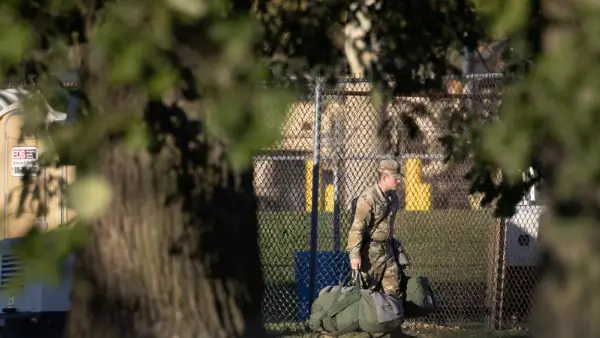
Supreme Court Blocks Trump's National Guard Deployment, Raises Questions About Insurrection Act
The Supreme Court has blocked President Donald Trump's attempt to send the National Guard into American cities, specifically Chicago, to help protect Immigration and Customs Enforcement agents and facilities. The court ruled that Trump had not met the requirements of a federal law that allows a president to call up the guard if he is unable to execute the nation's laws with the "regular forces." However, the decision did not address the president's authority under the Insurrection Act, a 19th-century law that gives the president broad discretion to deploy the military for domestic purposes. The Insurrection Act was last invoked by President George H.W. Bush during the 1992 Los Angeles riots. Experts say that if Trump were to invoke the act, it would likely be more politically contentious than deploying the National Guard. The administration had argued that using the National Guard was preferable to relying on the standing army, whose primary function is to win wars by deploying lethal force against enemies overseas. The Supreme Court's decision has raised questions about whether the administration will continue to pursue other legal authorities to justify a military presence in US cities. Experts predict that the administration will "run into similar trouble" if it attempts to invoke the Insurrection Act. The case has sparked a debate about the president's willingness to use the military for domestic law enforcement purposes, with some arguing that it would be a violation of the Posse Comitatus Act, which prohibits the use of the military for domestic law enforcement. The situation on the ground in Chicago has eased, with tensions decreasing and the administration announcing that it was "rightsizing" planned deployments to the city. However, the administration has argued that the deployments are still needed, and it is unclear what steps it will take next. The Supreme Court's decision has left many questions unanswered, including how the law Trump initially relied on interacts with the Insurrection Act, and when, if ever, the federal government can deploy the professional military for domestic law enforcement purposes consistent with the Constitution.

Trump Increases Pressure on Maduro, Warns Against "Playing Tough"
President Donald Trump has intensified pressure on Venezuelan President Nicholas Maduro, stating it would be "smart" for him to step down. In a press conference at his Mar-a-Lago club in Florida, Trump warned Maduro not to "play tough," implying severe consequences if he chooses to do so. The US has built up its military presence in the region, with 15,000 troops and several warships ready in the Caribbean. Trump also mentioned a "massive armada" prepared for Maduro, should he decide to resist. The US has recently increased its military activities in the area, including launching dozens of strikes on vessels allegedly carrying drugs, resulting in over 100 deaths. Trump announced plans to extend this program to land operations, targeting not only Venezuela but also any country where drugs are being smuggled into the US. The president's actions and statements come after he ordered a "complete blockade" of sanctioned oil tankers going into and out of Venezuela, aiming to cut off the government's primary source of revenue. Maduro has responded defiantly, stating that Venezuela will continue to trade oil despite the blockade and that regime change "will just not happen." The situation continues to escalate, with the US maintaining its firm stance against the Venezuelan government. Trump's warnings and the increased military presence have raised concerns and tensions in the region.
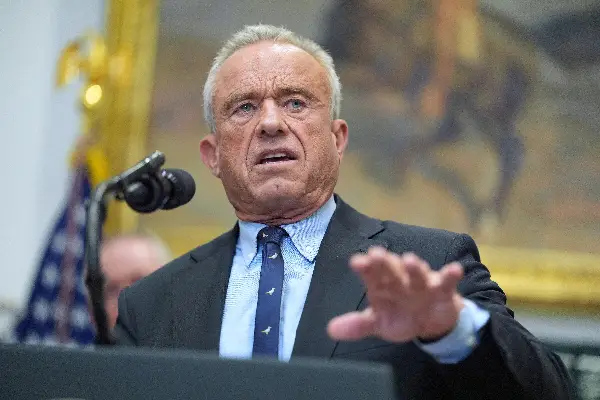
19 States and DC Sue HHS Over Declaration on Youth Gender-Affirming Care
A coalition of 19 states and the District of Columbia has sued the US Department of Health and Human Services (HHS) over a declaration that could limit access to gender-affirming care for young people. The declaration, issued last Thursday, claims that treatments like puberty blockers, hormone therapy, and surgeries are unsafe and ineffective for children and adolescents with gender dysphoria. It also warns doctors that they could be excluded from federal health programs if they provide such care. The lawsuit, filed in US District Court in Eugene, Oregon, alleges that the declaration is inaccurate and unlawful. New York Attorney General Letitia James, who led the lawsuit, stated that Secretary of Health and Human Services Robert F. Kennedy Jr. cannot unilaterally change medical standards and that no one should lose access to medically necessary healthcare due to government interference. The declaration is based on a peer-reviewed report that urged greater reliance on behavioral therapy rather than broad gender-affirming care for youths with gender dysphoria. However, major medical groups have criticized the report as inaccurate, and most major US medical organizations oppose restrictions on transgender care and services for young people. The lawsuit is the latest in a series of clashes between the administration and advocates over transgender healthcare for children. The administration has proposed rules to cut off federal Medicaid and Medicare funding from hospitals that provide gender-affirming care to children, which could further discourage healthcare providers from offering such care.
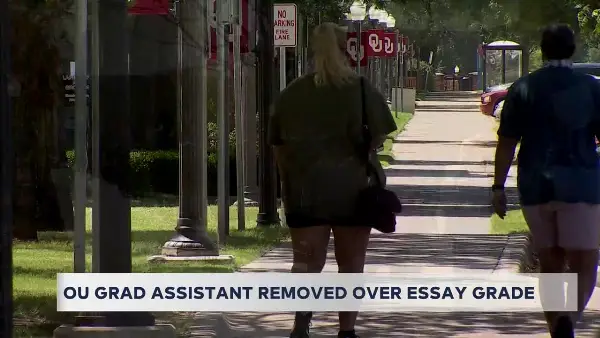
University of Oklahoma Removes Graduate Teaching Assistant After Discrimination Investigation
The University of Oklahoma has concluded an investigation into claims of discrimination against a student who received a zero on an assignment for referencing the Bible. As a result, the graduate teaching assistant responsible for grading the assignment has been removed from their instructional duties. The university's investigation found that the graduate teaching assistant was inconsistent in their grading standards and patterns. The student's grade appeal was approved, and the assignment was removed from their total point value for the class. The university emphasized its commitment to academic freedom and integrity, as well as its students' right to receive an education free from impermissible evaluative standards. The University of Oklahoma stated that it will continue to review best practices to ensure that instructors have the necessary training to objectively assess students' work. The incident sparked protests and petitions from professors and students, with some advocating for the graduate teaching assistant and others supporting the university's decision. The university engaged in conversations with the Faculty Senate Executive Committee to ensure a clear understanding of the facts and actions taken. The University of Oklahoma remains committed to teaching students how to think, not what to think, and will continue to work towards providing a fair and inclusive educational environment.

US Denies Visas to Former EU Commissioner and Others Over Social Media Rules
The US State Department has announced that it will deny visas to five individuals, including former EU Commissioner Thierry Breton, for allegedly seeking to "coerce" American social media platforms into suppressing viewpoints they oppose. Breton, who was instrumental in shaping the EU's Digital Services Act (DSA), has clashed with Elon Musk, the owner of X, over obligations to follow EU rules. The DSA imposes content moderation on social media firms, which has angered some US conservatives who see it as an attempt to censor right-wing opinions. The visa ban also applies to Clare Melford, who leads the UK-based Global Disinformation Index, as well as Imran Ahmed of the Center for Countering Digital Hate. Additionally, Anna-Lena von Hodenberg and Josephine Ballon of HateAid, a German organization, are subject to the ban. The US State Department accuses these individuals of advancing censorship crackdowns by foreign states, targeting American speakers and companies. In response to the visa ban, Breton posted on X, saying "To our American friends: Censorship isn't where you think it is." The affected individuals and organizations have denounced the move as an "authoritarian attack on free speech" and an "act of repression." Secretary of State Marco Rubio stated that the US will not tolerate "extraterritorial overreach by foreign censors targeting American speech."
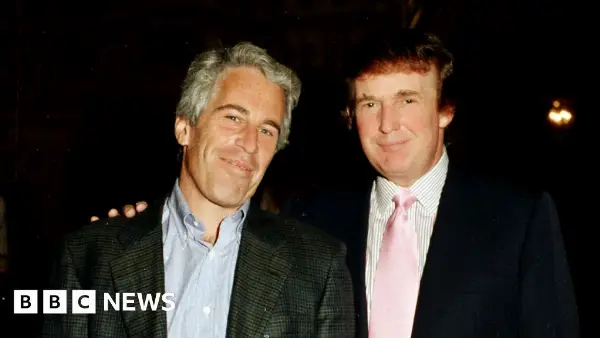
Trump Listed as Passenger on Epstein's Plane Eight Times, Prosecutor Says
US President Donald Trump was listed as a passenger on the private jet of late convicted sex offender Jeffrey Epstein eight times between 1993 and 1996, according to a new email released by the US Department of Justice (DOJ). The email, sent by an assistant US attorney in 2020, states that Trump traveled on Epstein's private jet more times than previously reported. Trump's name on the flight record does not indicate wrongdoing, and he has denied any wrongdoing in relation to Epstein. The DOJ released over 30,000 pages of documents related to Epstein, including the email, as part of the so-called Epstein files. The department noted that some of the documents contain "untrue and sensationalist claims" against Trump, which they say are unfounded and false. The release of the documents is part of a larger effort to publish all files related to Epstein, which was mandated by Congress. The email also mentions that Trump flew on Epstein's jet with other passengers, including his daughter Tiffany, son Eric, and Marla Maples. On one flight in 1993, Trump and Epstein were the only two listed passengers. The DOJ has faced criticism for missing the deadline to publish all the files, but has committed to releasing more documents over the coming weeks while protecting the victims involved.

Delaware State Police Trooper Killed in Active Shooter Incident at DMV Facility
A Delaware state police trooper was killed in an active shooter incident at a DMV facility in New Castle County on Tuesday afternoon. The suspect in the incident is also dead, according to Gov. Matt Meyer. The incident occurred around 2 p.m. at the facility on Hessler Boulevard in Minquadale. State police are continuing to assess additional injuries, but there is no official word yet on the exact number of people injured. Video from inside the facility shows what appears to be a bullet hole in a window, but it's not known if shots were fired from inside the DMV or if the shots came from the outside. Personal items could be seen scattered inside the facility. The names of those involved have not been released. Police are asking residents to avoid the area as they continue to investigate the incident. The trooper's role at the DMV, whether stationed there or responding to the report of a shooting, is also not known at this time. The incident is now over, according to state police. This is a developing story, and updates will be provided as more information becomes available.

US Department of Education to Investigate Brown University for Potential Clery Act Violations
The US Department of Education has announced a program review of Brown University to determine if the institution violated the Jeanne Clery Campus Safety Act, also known as the Clery Act. This decision comes after a shooting on campus on December 13, 2025, which resulted in the deaths of two students. The review will investigate whether Brown's campus surveillance and security systems, as well as its emergency notification protocols, met the standards required by the Clery Act. The Department's Office of Federal Student Aid will examine various aspects of Brown's safety procedures, including its annual security reports, incident response, and emergency notification systems. Brown University has been requested to submit relevant documents and information by January 30, 2026, as part of the review process. US Secretary of Education Linda McMahon stated that the Department is committed to ensuring that universities receiving federal funding prioritize student safety and comply with federal law. The Clery Act requires institutions of higher education to maintain certain campus safety and security standards, including the timely issuance of campus alerts and safety procedures. If Brown University is found to have violated the Clery Act, it may face fines and be required to implement policy changes to come into compliance with the law. The Department's investigation aims to determine whether Brown has upheld its obligations under the law to maintain campus security and protect its students. The review will also examine Brown's policies and procedures related to timely warnings, emergency notifications, and emergency response. The Department may undertake further action if it finds that Brown has failed to comply with the Clery Act.

Washington Governor Proposes 2026 Supplemental Budget Focusing on Housing, Transportation, and Affordability
Governor Bob Ferguson's proposed 2026-27 Supplemental Budget prioritizes three key areas: housing, transportation, and affordability. The budget aims to address the state's growing housing needs, with a record-setting 37% increase in funding for affordable housing. This includes $225 million for creating and preserving affordable housing homes through the Housing Trust Fund and $81 million for developing affordable multifamily rental projects. In transportation, the budget focuses on critical bridge and road preservation, with $1 billion allocated for major preservation work on 10 bridges and $1 billion for three new ferries. Additionally, $4.8 million is proposed for communications upgrades to maintain reliable State Patrol system connectivity. To address affordability, the budget provides relief to low-income families, including easing utility costs, expanding access to free early education, and preserving vital support systems like food benefits and health insurance subsidies. The proposal also includes $125,000 in utility bill credits for low-income families and adds 2,000 initial preschool slots through a partnership with the Ballmer Group. The federal administration's cancellation, freezing, or redirection of federal funds has led to 48 lawsuits, with Washington's Office of the Attorney General working to protect over $15 billion in promised federal investments. The proposed budget highlights the need for targeted investments to address the state's pressing issues and ensure a fairer tax system.